
Find California Recent Arrests
California recent arrest records are public. Anyone can search them. County sheriff websites hold booking logs from all 58 California counties. State databases have them too. These records show names, charges, and booking dates for every person booked into a California county jail. Search by name or booking number on most sites. There is no fee to look up recent arrests in California through county portals. The California Department of Justice and CDCR run statewide tools for arrest data and inmate records. This guide covers every way to find recent arrests in California and the laws that control who can access these records.
California Recent Arrests Quick Facts
How California Arrest Records Work
When someone is arrested in California, a booking record gets created at the county jail. The arresting agency logs a name, date of birth, and physical description. Charges get recorded. So do bail amounts. The time of arrest and booking goes into the file. City police in California often take arrested people to the county jail for processing. The sheriff's office handles the actual booking there. That is why county sheriff websites are the single best place to look up recent arrest information and booking details in any California county. Each of the 58 counties runs its own jail. Each keeps its own booking records. Larger counties like Los Angeles and San Diego handle thousands of bookings each week. Smaller rural counties may only book a few people per day.
The California Department of Justice keeps a statewide criminal history database separate from county booking logs. The DOJ system tracks arrests and court outcomes across all California jurisdictions over a person's lifetime. You can request your own arrest record through the DOJ's Record Review process. It costs $25. You must submit Live Scan fingerprints at a local police department or sheriff's office in California. The DOJ will not give your record to someone else without your consent. For checking another person's arrest status, use county booking logs. The California Incarcerated Records and Information Search is another state tool run by CDCR. It covers people in California state prisons. You can search by name or CDCR number. Results show the inmate's name, age, current housing location, admission date, and parole hearing dates. CIRIS does not include people held in county jails on recent arrest charges. For county jail information in California, check the sheriff's website directly.
The California DOJ record review page explains how to request your own criminal history in California.
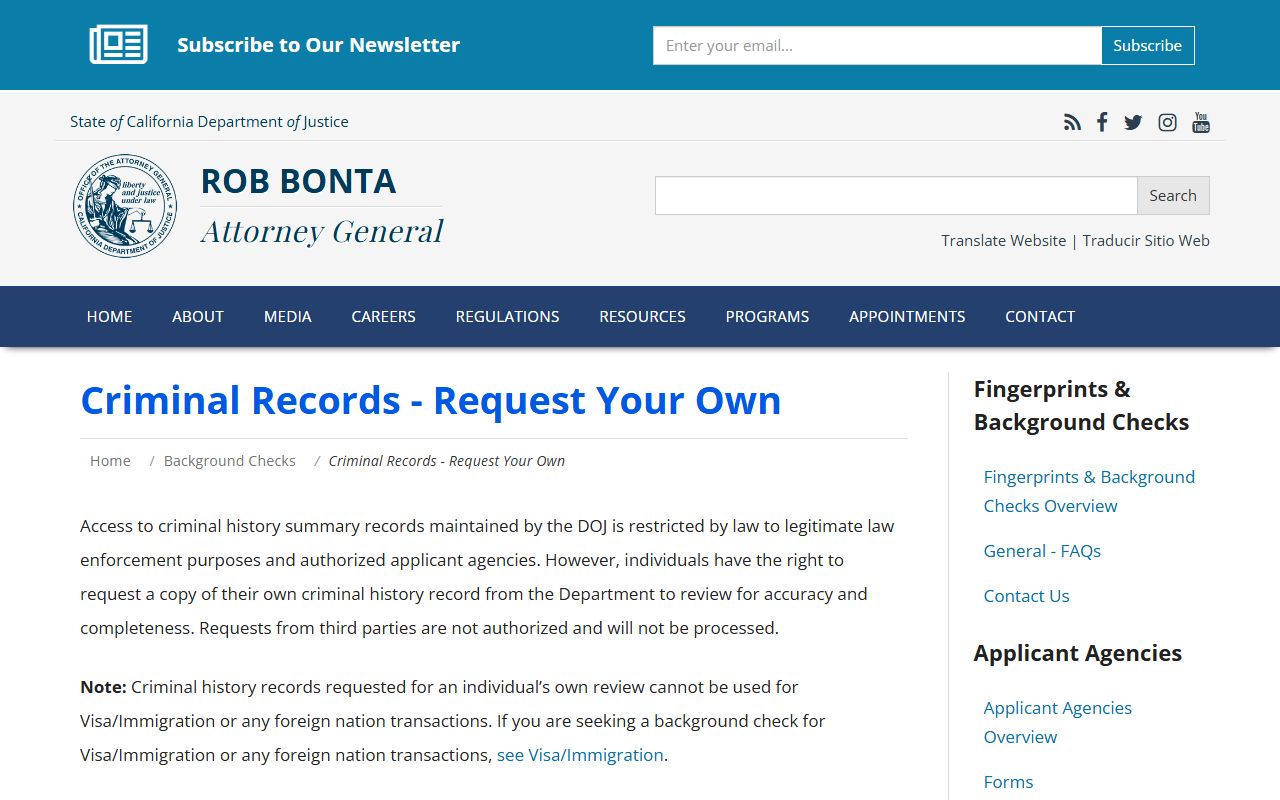
This page covers the Live Scan fingerprint steps and $25 fee for getting your California arrest history on file with the state.
The CDCR CIRIS database lets you search for inmates currently in California state prisons.
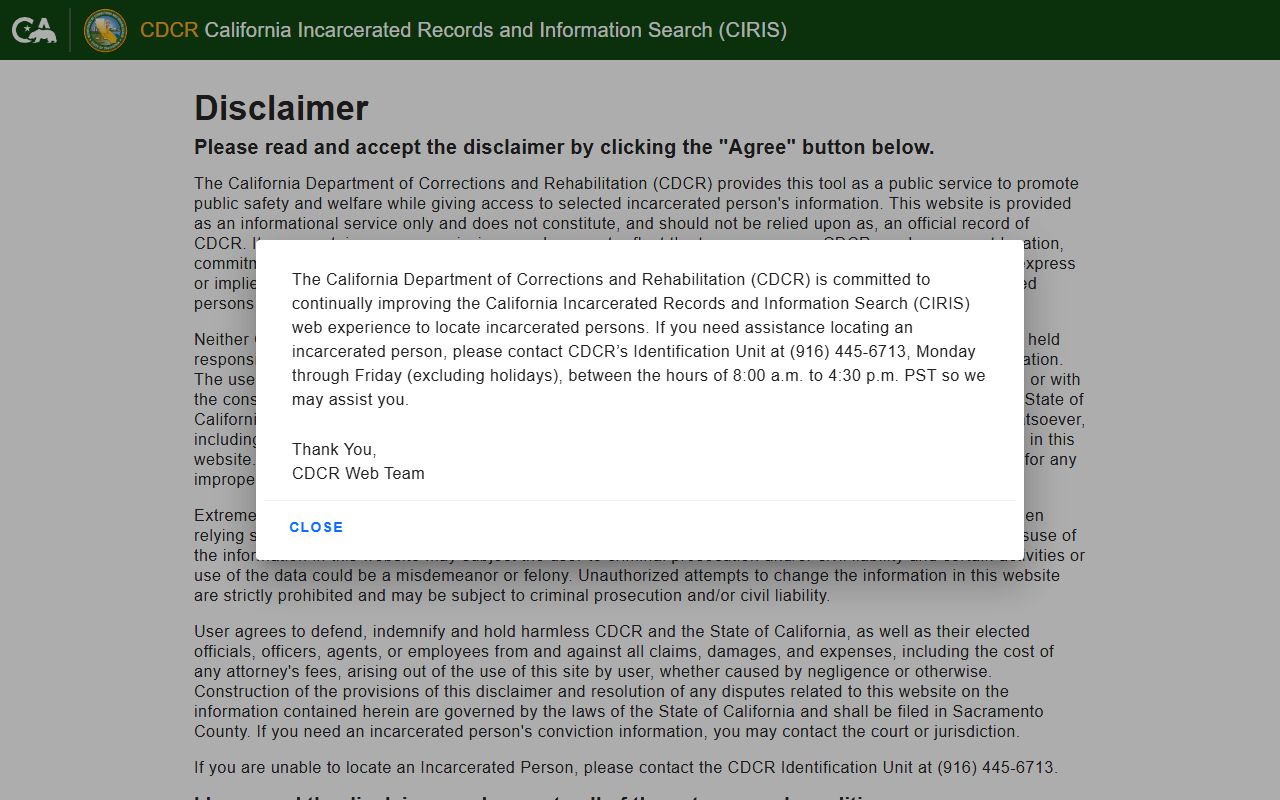
CIRIS results include the inmate's name, housing location, commitment counties, and admission date for California state prison inmates.
Note: The DOJ processes record review requests within about four weeks after getting your fingerprints in California.
California Booking Logs and Jail Rosters
Most California counties post their booking logs or jail rosters online for free. These are the fastest way to check for recent arrests in California. A booking log lists everyone booked into the county jail over a set time frame. Most cover 24 to 72 hours. A jail roster shows who is in custody right now. Some counties have both. The Los Angeles County Sheriff inmate search lets you look up people by name and date of birth. The San Diego County Sheriff runs a "Who's In Jail" search tool that covers all San Diego County arrests. Riverside County's JIMS system allows searches by name or booking number. Each county in California uses its own software and format, but the basic booking information is the same across the state. You will see the person's name, booking date, charges, bail amount, and custody status. These tools update in real time or close to it. There is no charge to search California county booking logs.
Several third-party platforms power the arrest booking log systems across California counties. Many smaller counties rely on these tools. Knowing the platform can help you navigate faster when looking up recent arrests in California.
- CitizenRIMS, used by Del Norte, Siskiyou, Lake, Calaveras, El Dorado, and other California counties
- CrimeGraphics, used by Amador, Mono, Lassen, and several mountain counties in California
- VINE (Victim Information and Notification Everyday), a statewide California system at 877-411-5588
- Zuercher Portal, used by Sutter County in California
- NewWorld Systems, used by Merced and Mendocino counties for California arrest bookings
California's Public Records Act gives every person the right to request records from state and local agencies. This includes arrest records. Under Government Code Sections 7920.000 through 7931.000, agencies in California must respond to requests within 10 days. They can take a 14-day extension in some cases. The DOJ charges 10 cents per page for copies. County sheriff departments may have their own fees for arrest report copies. San Diego County charges $20 for an arrest report copy, though the first copy is free for crime victims. You can also file a records request through the DOJ's online form. Many California cities use NextRequest portals for public records requests as well.
California's Public Records Act information page describes your right to access government arrest records in the state.
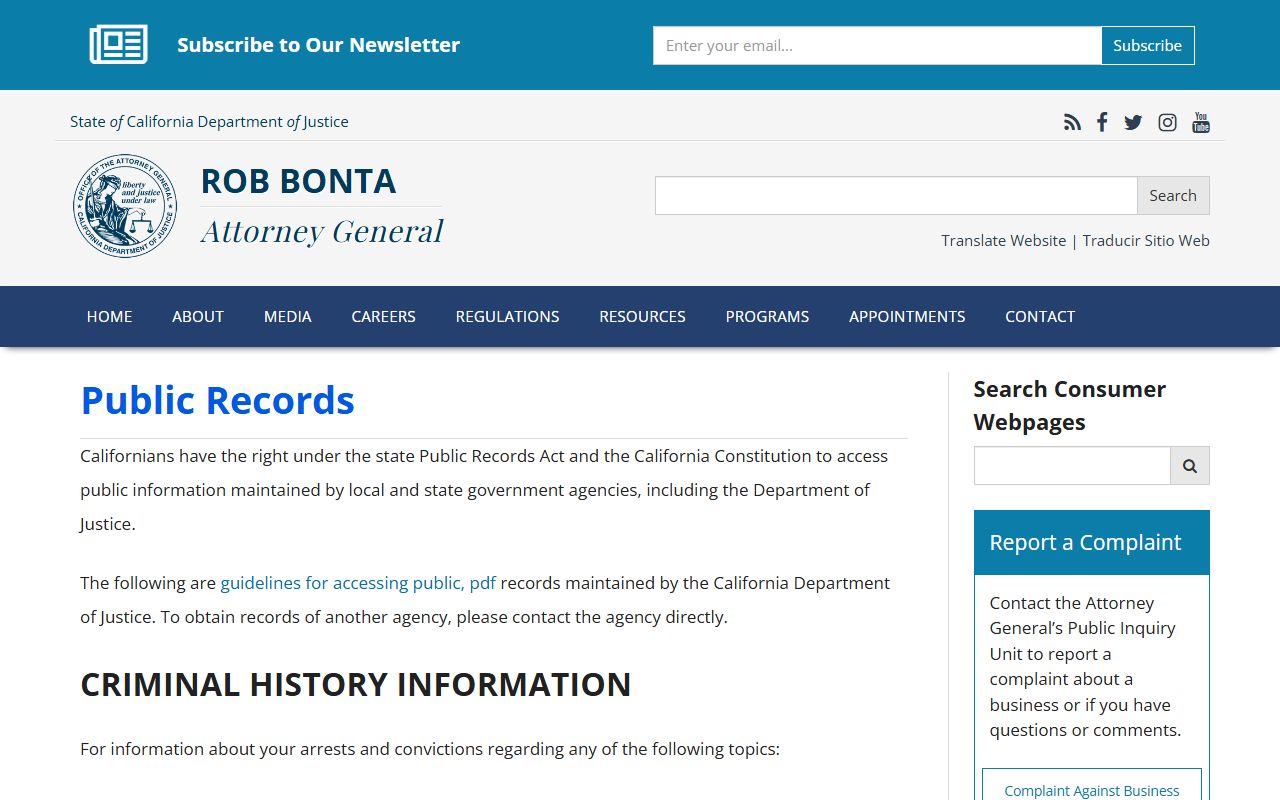
The PRA gives everyone in California the right to get public records from state and local government agencies that hold arrest data.
You can file a records request through the DOJ's online Public Records Act request form.
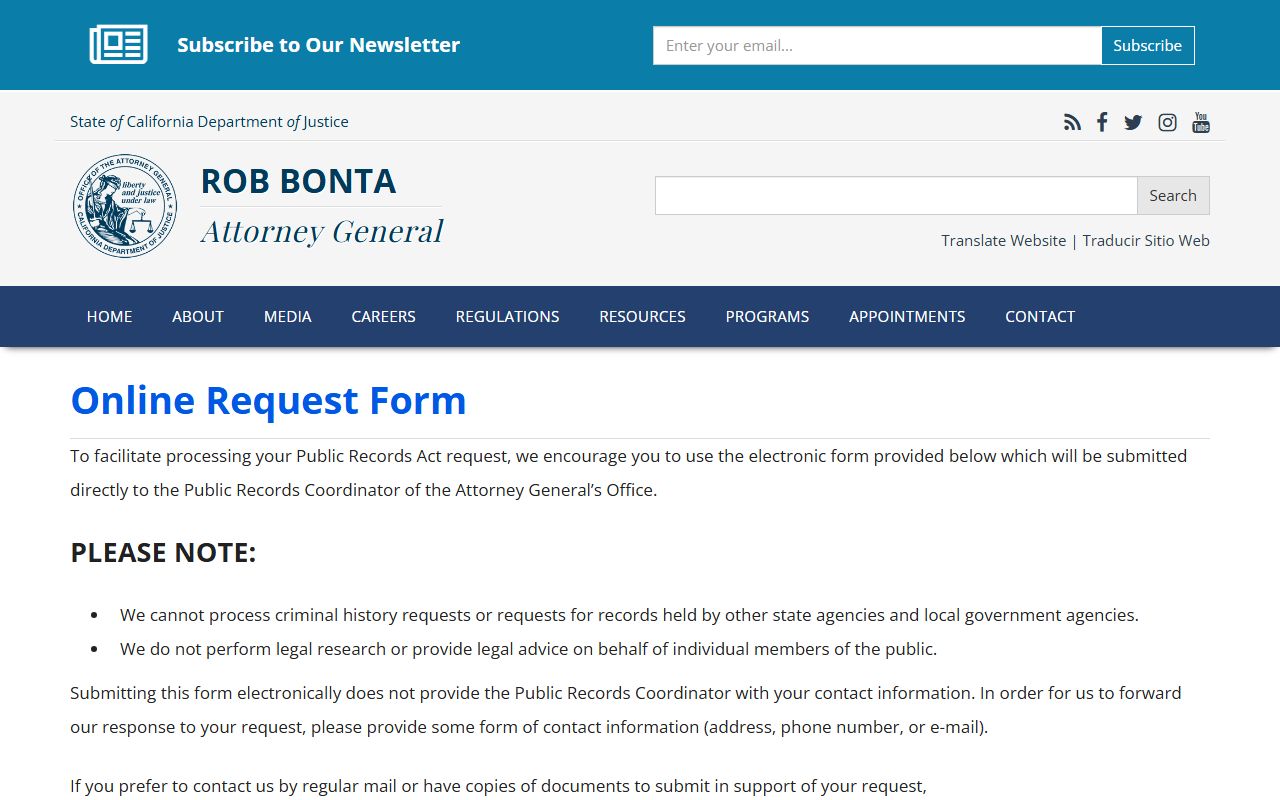
This form goes directly to the Public Records Coordinator at the California Attorney General's office for processing.
California Arrest Disclosure Laws
California Government Code Section 7923.610 is the key law for public arrest records in the state. It requires every state and local law enforcement agency to make specific arrest information public. This is not optional for agencies. The law says they "shall make public" the listed items for each arrest unless doing so would risk someone's safety or hurt an ongoing investigation. It took effect on January 1, 2023. Under this California statute, the following arrest details must be disclosed:
- Full name and occupation of the arrested person
- Physical description including date of birth, sex, height, and weight
- Time, date, and location of the arrest
- All charges and the bail amount set
- Time and manner of release or current holding location
- Factual circumstances surrounding the arrest in California
Penal Code Section 13300 defines "local summary criminal history information" in California. This is the master record that local agencies compile about a person's arrest and criminal history. It includes names, dates of arrests, arresting agencies, booking numbers, charges, and case outcomes. Access to this full local criminal history is restricted in California. It is not the same as the public booking log. Law enforcement, authorized agencies, and the person themselves can get it. The general public cannot. There is also a broad exemption under Government Code Section 7923.600 that lets law enforcement agencies withhold investigative records, intelligence files, and security procedures from public view. So while basic arrest details are public under Section 7923.610 in California, the underlying investigation records often are not. This creates two tiers of access for California arrest information.
The full text of Government Code Section 7923.610 is on the California legislature's website.
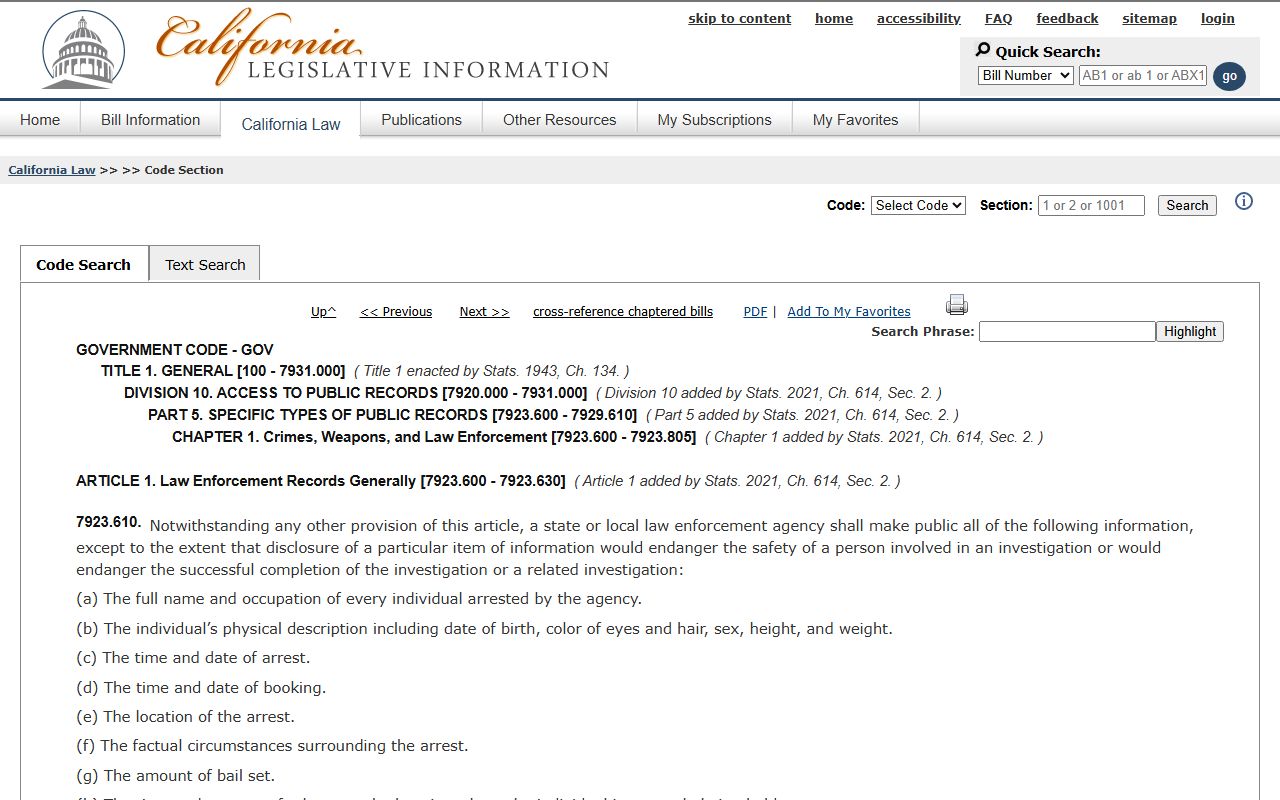
This statute lists every piece of arrest information that law enforcement in California must share with the public.
Penal Code Section 13300 is also available on the California state legislature site.
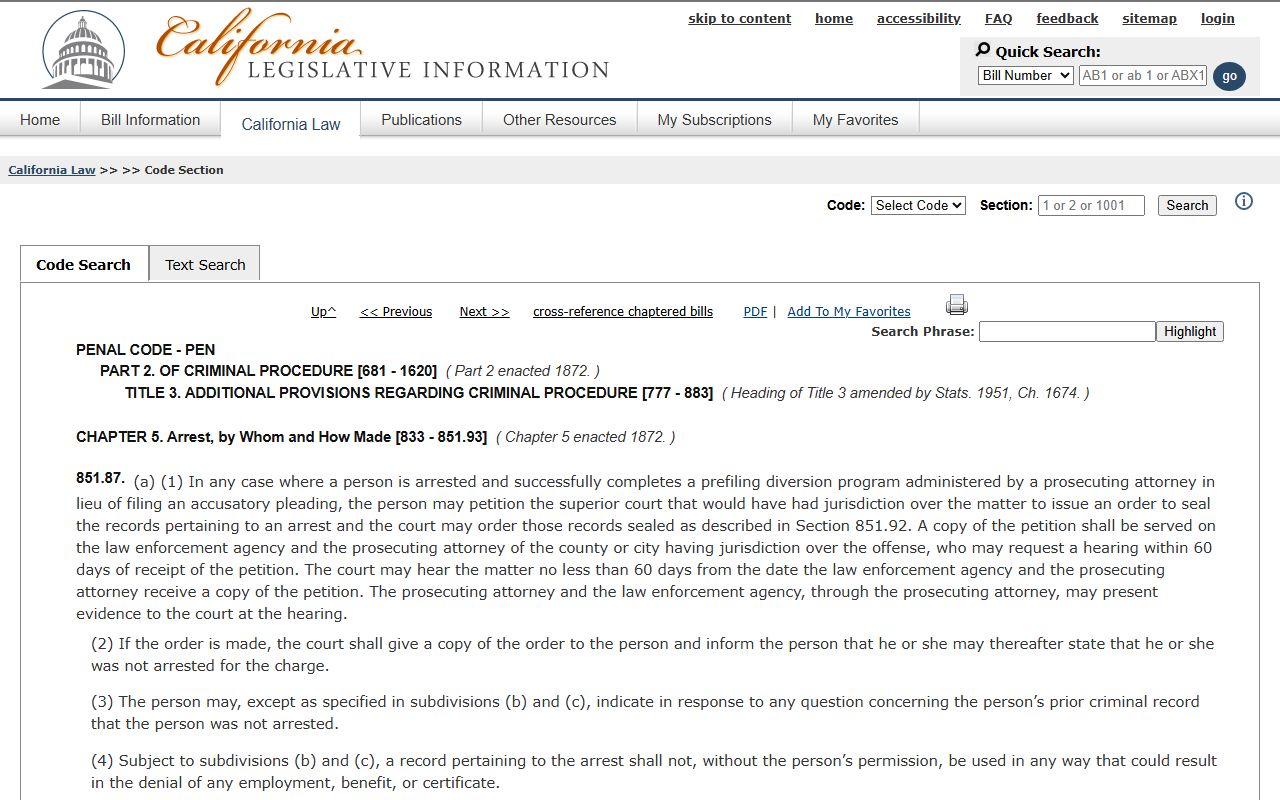
This California law governs local criminal history records and limits who can see the full arrest summary beyond what booking logs show.
Note: Basic arrest details are public in California, but the investigation files behind the arrest may be kept confidential under state law.
Sealing California Arrest Records
California lets people seal their arrest records in certain situations. Penal Code Section 851.87 allows a person to petition the court to seal an arrest that did not lead to a conviction. This applies when charges were dropped or when someone completed a prefiling diversion program. Once a California court seals the record, that person can legally say they were never arrested for that charge. Sealed arrest records cannot be used against someone in job applications or background checks in California. The petition goes to the court in the county where the arrest took place. There is no filing fee for the petition in most cases.
California also has an automatic system for clearing arrest records. Assembly Bill 1076 created Penal Code Section 851.93 to handle this. Under this California law, the DOJ reviews its statewide criminal databases every month. It looks for people who qualify for arrest record relief without needing to file anything. A person qualifies if their arrest was for a misdemeanor and the charge was dismissed in California. They also qualify if no charges were ever filed and at least one year has passed since the arrest date. This law covers California arrests from January 1, 2021 forward. The relief happens automatically. No paperwork is needed. No court hearing takes place. The DOJ simply updates the record. Before AB 1076, everyone in California had to go through the court petition process. The automatic system now clears thousands of arrest records each month across California.
Getting arrest records sealed can take time through the courts. The automatic relief under AB 1076 is faster for qualifying California arrests. But it only covers certain misdemeanor cases in the state.
The text of Assembly Bill 1076 describes the automatic arrest record relief program in California.
Under this law, the DOJ reviews California arrest records monthly and grants relief to eligible people across the state.
California Booking Photo Rules
Booking photos from California arrests have their own legal rules. Senate Bill 1027 added Civil Code Section 1798.91.1 to California law. It makes it illegal to charge someone money to remove their booking photo from a website. This targets commercial mugshot sites that post arrest photos from California jails and then demand payment for removal. A person harmed by this practice can sue for at least $1,000 per violation plus attorney's fees in California. The law also covers actual damages if they are higher. This gives people a real legal tool to fight back against mugshot websites that exploit California arrest records.
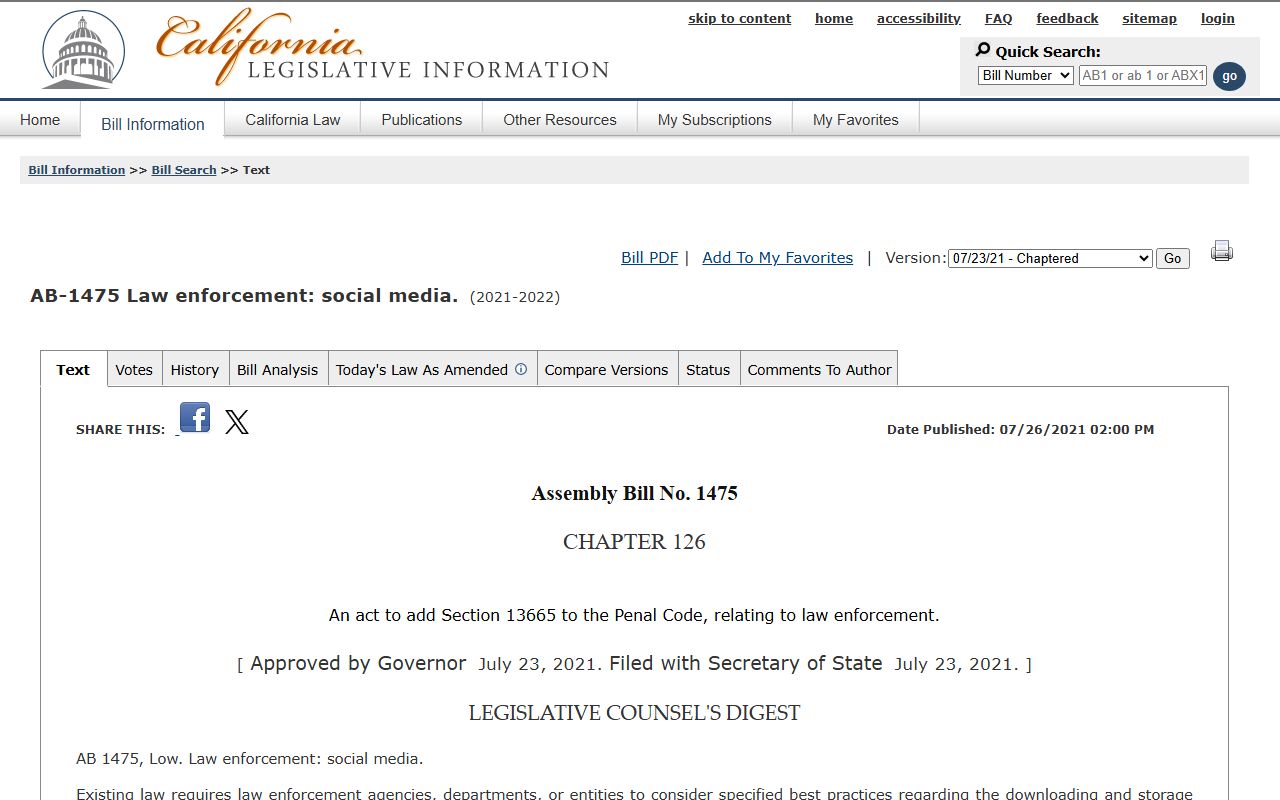
Assembly Bill 1475 added another layer to California booking photo law. It restricts police and sheriff's offices from posting arrest booking photos on social media for nonviolent crimes. There are three exceptions under this California law. One is when the suspect is a fugitive or a threat to public safety. Another is when a judge orders the photo released. The third is when there is an urgent law enforcement reason. This law applies to all California police and sheriff agencies and went into effect to stop the routine posting of arrest photos before any conviction.
Senate Bill 1027 is available on the California legislature website for full review.
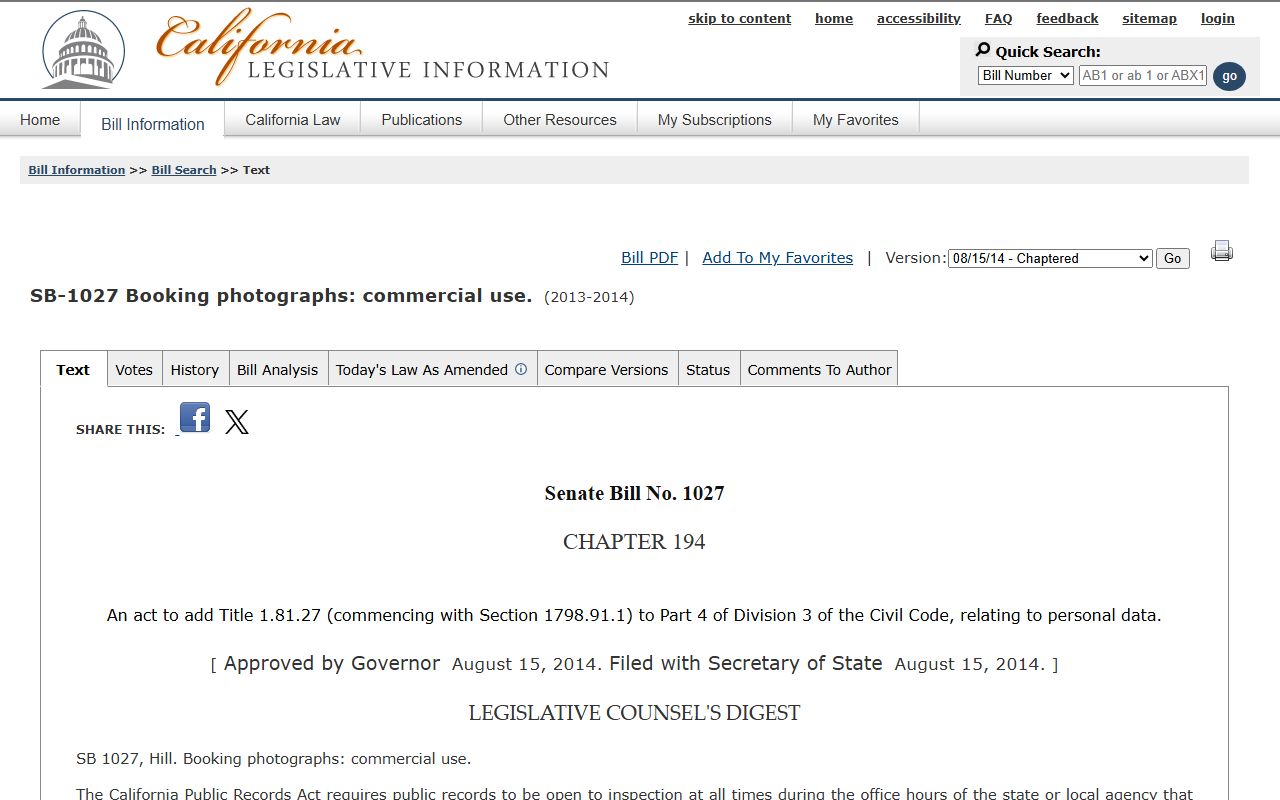
SB 1027 makes it a violation to charge fees for removing California arrest booking photos from commercial websites.
Note: California booking photo laws protect people from having arrest images used for profit or posted on social media without valid law enforcement cause.
Browse California Arrests by County
Each California county sheriff runs its own jail and publishes recent arrest booking records. Pick a county below to find local arrest search tools and contact details for that area.
View All 58 California Counties
Recent Arrests in California Cities
Many California cities have their own police departments that handle arrests. Select a city below to find arrest records, booking logs, and jail information for that area.